

Why Active Play Matters for Children (especially as we move into Spring)
Share
Why children naturally become more active in spring
As winter begins to fade and the days slowly get longer, many families notice a familiar shift in their children’s energy levels. After months of shorter days, colder weather and more time indoors, children often feel a strong urge to move more, explore more and play more actively.
What many parents experience as “restlessness” is often something much simpler: a natural need for movement. Children’s bodies are designed to move. Climbing, balancing, crawling, jumping and building are all part of how children explore their environment and develop confidence in their physical abilities.
As we move into spring, supporting active play becomes especially important. Longer days and improving weather naturally encourage more movement and curiosity.
Why active play is so important for child development
Active play plays a vital role in supporting children’s development across several key areas.
Physical development
Movement helps children develop:
- balance and coordination
- core strength and stability
- gross motor skills
- spatial awareness
Activities such as climbing, crawling and balancing strengthen muscles and build body awareness in ways that sedentary activities cannot.
Cognitive development
Physical play also supports brain development.
When children build structures, navigate obstacles or experiment with new ways of climbing and moving, they are developing important thinking skills such as:
- problem solving
- planning and sequencing
- cause-and-effect understanding
- persistence when something doesn’t work the first time
These are the same skills that support learning later in school.
Emotional development
Active play can also help children regulate their emotions.
Movement helps release built-up energy and tension. Many parents notice that after a good period of active play, children are calmer, happier and more focused.
This is because physical activity supports the brain systems responsible for emotional regulation.
The connection between movement and learning
Children learn best when their bodies are engaged.
Research increasingly shows that physical movement helps strengthen the connections in the brain that support attention, memory and learning. When children move, climb and build, they are simultaneously:
- testing ideas
- experimenting with solutions
- learning from trial and error
This combination of movement and thinking is one of the most powerful ways children learn. Play systems that encourage construction, building and movement combine these benefits by allowing children to create their own physical challenges.
Encouraging more active play at home
As we move into spring, many families are looking for ways to help children stay active both indoors and outdoors. Active play doesn’t have to mean organised sports or structured activities. Some of the most beneficial play happens when children are free to move and explore at their own pace.
Ideas to encourage more movement at home include:
- building climbing structures
- creating obstacle courses
- constructing dens and tunnels
- experimenting with balance challenges
- designing their own games
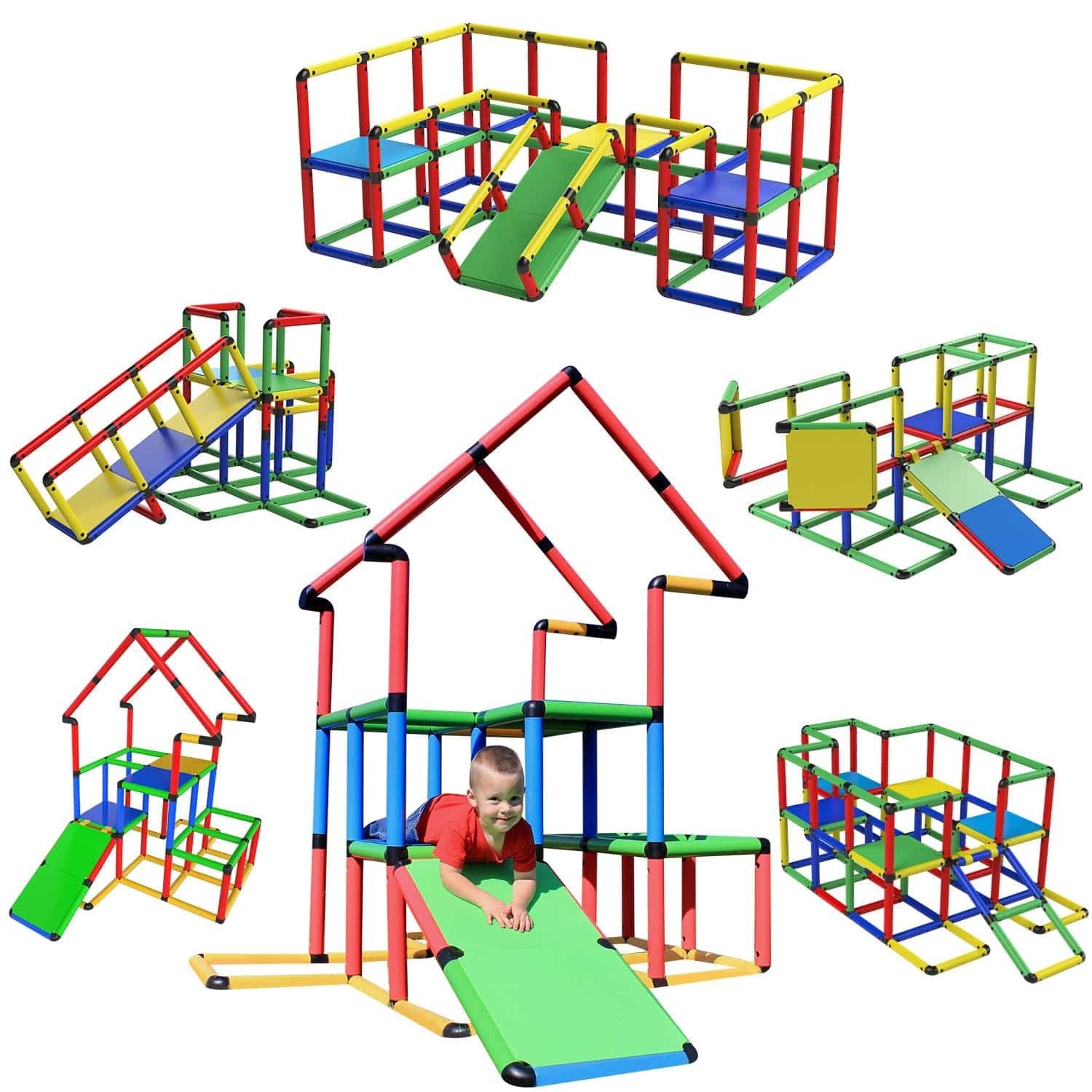
When children are given the freedom to build and create their own play environments, they often stay engaged for longer. This is why climbing gyms, modular play kits and construction kits can be especially valuable. They allow children to change their play environment regularly and create new challenges each day.
Why modular play systems support active play
Modular play systems encourage children to become designers of their own play.
Instead of a single fixed toy, children can build:
- climbing frames
- tunnels
- obstacle courses
- dens and hideaways
- imaginative play structures
Because the structures can be rebuilt and reconfigured, the play experience constantly evolves and this keeps children engaged while encouraging creativity and problem solving. You can explore some examples of these types of play systems in the Indoor Fun, STEM Funphix and Outdoor Fun collections.
Supporting active play all year round
Although spring naturally brings more outdoor play, active play inside the home remains just as important. Here in the UK, the weather can change quickly — sunny mornings often turn into rainy afternoons. Having play systems that work both indoors and outdoors helps children stay active no matter the season. Creating opportunities for movement at home helps children burn energy, develop confidence and enjoy the simple pleasure of play.
FAQs
How much active play do children need each day?
Health experts recommend that young children engage in at least 60 minutes of physical activity each day. For many children, this happens naturally through play.
Why do children seem more energetic in spring?
Longer daylight hours and improved weather naturally increase energy levels and curiosity in children. After spending more time indoors during winter, children are often eager to move more.
What types of play support physical development?
Activities that involve climbing, balancing, crawling and building are especially helpful for developing strength, coordination and spatial awareness.